

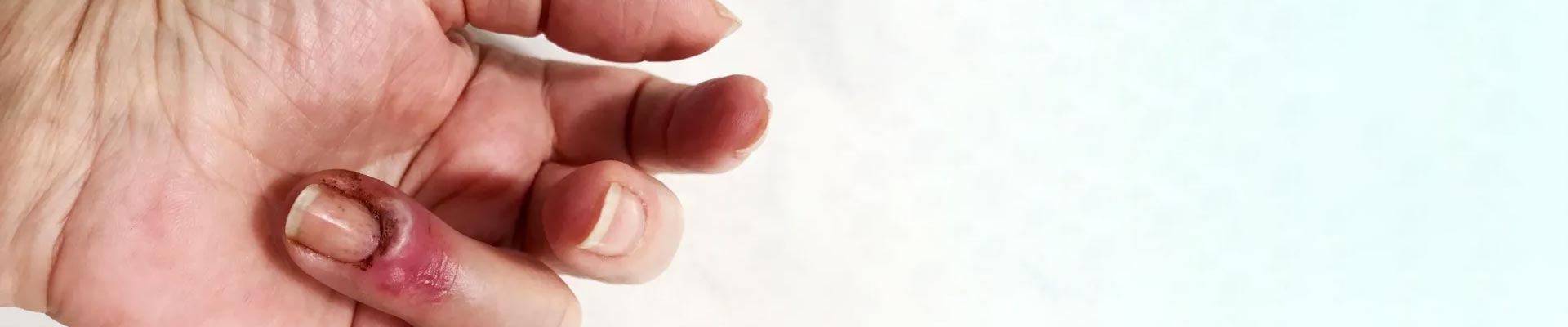
Paronychia
Inflammation around the nail is rarely taken seriously in the first days. Many people attribute it to accidental irritation, a bad manicure, or a minor everyday issue rather than an infection. However, the body does not send signals without a reason. Sometimes, behind seemingly minor changes lies a process that requires proper attention—not experiments with home care.
Paronychia is not something people talk about much until it starts to disrupt everyday comfort. It may seem like a small issue, unlikely to cause serious concern. But it is often from such “small things” that conditions begin—ones that are harder to ignore later. So, how can you recognize paronychia, why does it occur, and what helps restore comfort?
What does paronychia look like?
Paronychia is an inflammation of the nail fold (periungual tissues) around the nail plate. It most commonly affects the lateral or proximal nail fold. The infection can localize near a fingernail or toenail, and in both cases it can cause noticeable discomfort in daily life.
Typically, the symptoms of paronychia appear as localized inflammation of the finger or toe near the nail: the tissues in this area become red, swollen, and tender or painful to the touch. Sometimes the discomfort increases with pressure, walking, performing daily tasks, or contact with water. In some cases, paronychia may cause a throbbing sensation, tissue thickening, and in more advanced stages—the formation of pus near the nail (an abscess).
In some instances, the process is limited to a single area, while in others it may spread to other nail folds. That is why it is important not to ignore even minor changes at first glance, as there is a risk of complications.
What causes it?
Paronychia of the finger develops when the skin around the nail plate loses its natural protective barrier. Even minor damage in this area can create conditions for inflammation. Paronychia may be acute (more often bacterial, particularly caused by Staphylococcus aureus) or chronic (more often associated with Candida spp., as well as prolonged irritation and moisture).
The most common causes and contributing factors include:
- microtrauma — small cuts, cracks, or hangnails;
- improper manicure or pedicure — cutting the cuticle too deeply, injuring the nail fold, or using non-sterile tools;
- ingrown nail — especially common on the toes, where soft tissues are constantly irritated and may later become infected;
- frequent contact with water and household chemicals, as well as irritation from cosmetic or chemical products;
- prolonged pressure or friction — uncomfortable footwear, stress on the toes, or repeated mechanical irritation;
- certain chronic conditions and weakened immune defenses — the risk of paronychia may be higher in people with diabetes, circulatory disorders, skin conditions, or a weakened immune system.
Often, paronychia does not result from a single cause but from a combination of several factors. That is why it is important to pay attention not only to symptoms but also to daily hand and foot care habits.
How to reduce inflammation in the finger?
The most important thing is not to try to “open” the abscess near the nail on your finger or toe, not to cut the skin, and not to experiment with aggressive remedies. Such actions can worsen the condition, intensify the inflammatory process, and lead to purulent complications.
If the area around the nail becomes red, swollen, and painful, the right decision is to consult a doctor as soon as possible. A specialist will assess the severity of the symptoms, determine the cause, and choose the appropriate treatment. Depending on the case, this may include topical treatments (antiseptics, antibacterial or antifungal medications, and in some cases topical corticosteroids), proper care of the affected area, and, if necessary, more advanced treatment.
How to treat paronychia?
Treatment of paronychia depends on how severe the inflammation is and whether there is a collection of pus. In the early stages, a doctor may recommend local treatment, warm soaks or compresses, and, if needed, medications against bacterial or fungal infection. If an abscess has already formed, surgical opening and drainage may be required. In chronic paronychia, the focus is not only on treatment but also on protecting the skin from moisture and irritants and restoring its barrier function.
How long does paronychia take to heal?
The duration of treatment is always individual. If the inflammation is acute and a person seeks help early, relief can come quite quickly. However, if the condition is more advanced—with pus, significant swelling, or a long-standing issue—treatment may take longer. Chronic paronychia is usually treated longer than acute, and a condition lasting more than 6 weeks is considered chronic.
Much depends on the stage at which the patient seeks medical care, whether there is an infectious or inflammatory-irritative process, whether drainage is needed, as well as the overall condition of the skin and contributing factors. Therefore, if your finger near the nail becomes swollen, or you notice redness, swelling, pain, or other changes in the nail area, it is important to schedule a consultation with a dermatologist at the LeoDerm Medical Center in Lviv. A specialist will examine the area, determine the cause of the inflammation, assess the condition of the skin, and select the appropriate treatment for your specific case.
If you experience symptoms of an illness, please consult a doctor.