

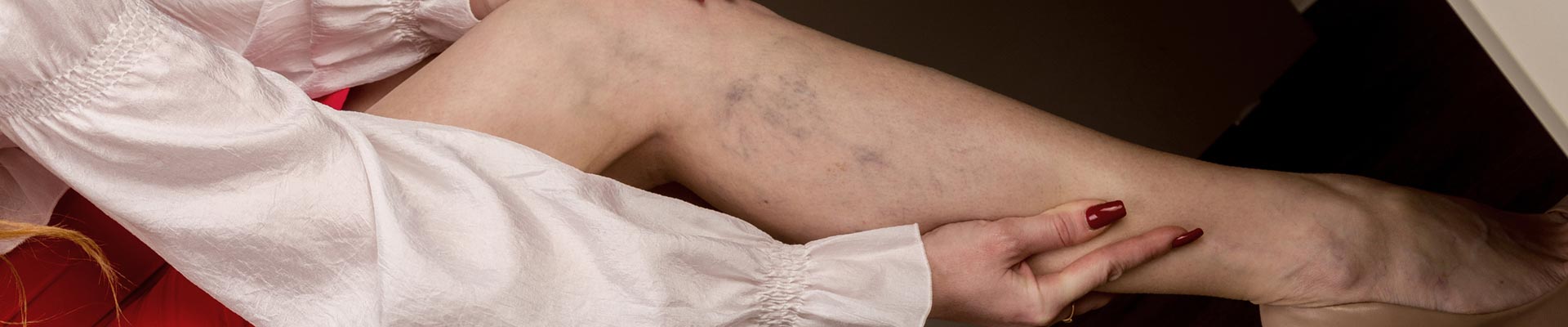
Removal of Spider Veins on the Legs
Even the slimmest and most well-groomed legs can appear “imperfect” when spider veins or vascular networks develop on them. This is not always related to age or overall health—sometimes the issue is linked to genetics, strain on the legs, or hormonal changes. Many people try to conceal or eliminate these veins with cosmetic products, but creams and ointments rarely deliver the desired results. That is why more and more people are turning to modern aesthetic cosmetology, where the removal of spider veins has become a safe, gentle, and effective way to restore an even, beautiful skin tone.
The cosmetologist doctors at the LeoDerm clinic explain the causes of this cosmetic concern, how to remove spider veins on the legs, and which preventive measures can help avoid their recurrence.
Causes of Spider Veins on the Legs
Spider veins on the legs are small, dilated capillaries that become visible under the skin as a fine network or “web” of red, purple, or bluish lines. It is important to understand that this is not varicose veins: spider veins are not accompanied by swelling, pain, or bulging veins and are purely a cosmetic concern. However, they may indicate increased strain on the venous system and can be an early sign that it’s worth paying attention to vascular health.
If spider veins appear on the legs, the causes can vary widely:
- genetic predisposition — if one of your parents had spider veins, the risk of developing them is significantly higher;
- hormonal changes — pregnancy, lactation, use of hormonal contraceptives, or hormonal fluctuations during menopause;
- prolonged standing or sitting — occupations involving long periods of static load;
- excessive physical strain — especially strength training that increases pressure in the veins;
- excessive sun exposure or tanning beds — which can weaken capillary walls;
- circulatory disorders and reduced capillary tone;
- unhealthy diet and harmful habits (particularly smoking);
- strong mechanical impact — such as intensive anti-cellulite massages or aggressive scrubbing.
The need to treat spider veins on the legs most often arises in people who fall into the following categories:
- women (due to hormonal factors);
- people with a hereditary tendency toward weak vascular tone;
- pregnant women and those who have recently given birth;
- individuals who spend long periods standing or sitting (such as hairdressers, salespeople, office workers);
- people who are overweight;
- athletes who regularly engage in strength training.
Spider veins on the legs are not a disease in the strict sense, but rather a signal that the capillaries need attention. Fortunately, modern aesthetic medicine offers effective methods for eliminating these vascular concerns.
What Is the Difference Between Varicose Veins and Spider Veins?
Spider veins (also known as telangiectasias) and varicose veins of the lower limbs are often confused, but they are different conditions.
Spider veins are small, dilated capillaries located close to the surface of the skin. They appear as thin red, blue, or purple web-like lines or star-shaped patterns and do not protrude above the skin. Unlike varicose veins, spider veins are primarily a cosmetic concern.
Varicose veins, on the other hand, involve larger veins. Their walls weaken, the valves function poorly, and blood begins to pool. As a result, the veins become visibly enlarged, raised above the skin, and may appear twisted. Varicose veins are often accompanied by heaviness, fatigue, swelling, nighttime cramps, and pain. This is a medical condition that requires treatment under the supervision of a phlebologist.
In summary, if spider veins are mainly about aesthetics, varicose veins are about health. Before treating any visible signs, it is advisable to consult a specialist to assess the condition of your veins and capillaries and choose the appropriate approach.
Removal of Spider Veins on the Legs
At the LeoDerm clinic, spider vein removal on the legs is performed using advanced equipment. Candela Vbeam Perfecta is a pulsed dye laser specifically designed for the gentle and precise treatment of vascular lesions. Its action targets hemoglobin within blood vessels, allowing it to effectively eliminate spider veins, vascular networks, localized redness, and other capillary-related concerns without damaging healthy tissues.
How does spider vein removal on the legs work? During the procedure, the laser emits short pulses of light at a specific wavelength. This light is absorbed by hemoglobin in the dilated capillaries, heating them and causing the vessel walls to “seal.” As a result, the treated capillary gradually stops functioning and is naturally reabsorbed by the body over time. The surrounding skin remains unaffected, making the procedure safe and comfortable.
The Candela Vbeam system features patented Dynamic Cooling Device (DCD) technology, which sprays a cooling agent onto the skin just before each laser pulse. This reduces thermal impact on the epidermis, helps prevent burns, and makes the procedure significantly more comfortable.
Initial improvements can be seen almost immediately, as the treated vessels become lighter. The full effect develops gradually over 4–8 weeks as the body naturally eliminates the treated vessels. The number of sessions depends on the density and diameter of the vessels—typically, 1 to 3 sessions are sufficient for complete removal of spider veins on the legs.
Advantages of the Candela Vbeam Perfecta Laser:
- precisely targets only blood vessels without damaging the skin;
- minimal risk of pigmentation or scarring;
- painless procedure thanks to the cooling system;
- suitable for all areas, including the face and sides of the nose;
- short recovery period — no need for a long break from daily activities.
Before removing spider veins on the legs, a cosmetologist performs a diagnostic assessment to rule out contraindications, such as:
- pregnancy and breastfeeding period;
- acute inflammatory processes or infections in the treatment area;
- active tanning or recent sunburn;
- use of photosensitizing medications;
- blood clotting disorders;
- oncological diseases (after consultation with a doctor).
Candela Vbeam Perfecta is one of the most effective methods for removing spider veins. It helps restore an even skin tone and smoothness to the legs without prolonged recovery or discomfort.
Prevention of Spider Veins on the Legs
To reduce the risk of developing spider veins or prevent their recurrence after treatment, it is important to support vascular health and proper venous circulation. This does not require drastic changes—consistent leg care and simple adjustments to daily habits are often enough:
- regular physical activity;
- maintaining a healthy body weight (and reducing it if necessary);
- avoiding prolonged periods in one position;
- choosing moderate exercise instead of excessive strain;
- protecting the skin and blood vessels from UV exposure;
- wearing compression garments;
- following a balanced diet.
Preventing varicose veins and spider veins is not only about appearance but also about vein health. A comprehensive approach helps not only reduce the risk of new spider veins but also maintain a feeling of lightness and comfort every day. To prevent complications, it is advisable to consult a doctor at the first signs of spider veins or varicose veins.
If you are looking for a place to undergo painless spider vein removal on the legs in Lviv, book a consultation with our cosmetologist doctors. Our specialists work with various stages, provide an individual approach to each patient, and know how to eliminate spider veins on the legs quickly and effectively.
If you experience symptoms of an illness, please consult a doctor.